

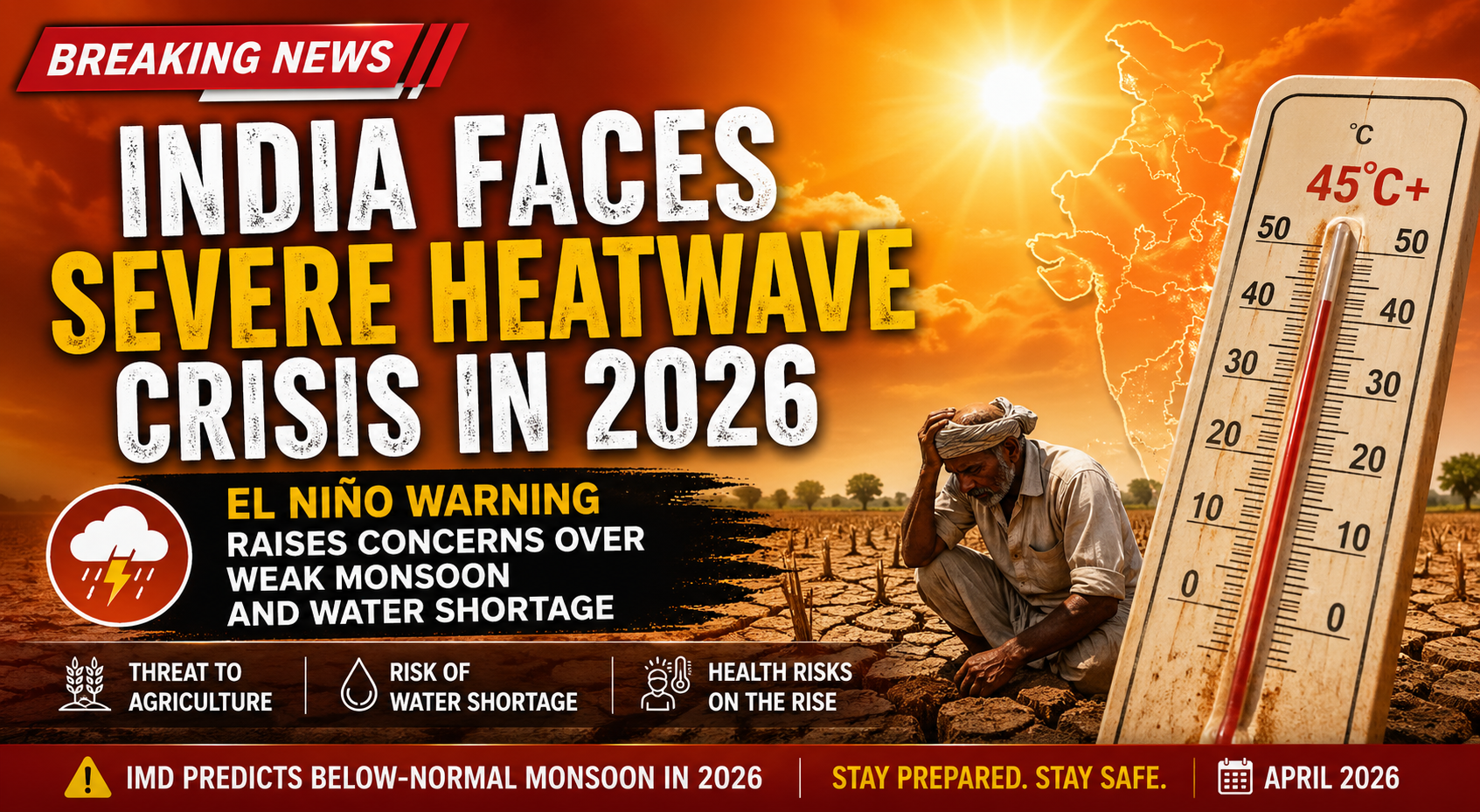
India is currently facing an intense heatwave, with temperatures soaring across several regions and creating serious challenges for daily life. The situation has become more alarming as global weather agencies warn of the possible return of El Niño conditions by mid-2026, which could further worsen the country’s climate situation.
According to recent updates, large parts of northern, central, and eastern India are experiencing unusually high temperatures, with both daytime heat and warm nights making conditions extremely uncomfortable. Weather experts have noted that this year’s summer has arrived earlier than usual and is expected to remain severe in the coming months.
The World Meteorological Organization (WMO) has indicated that climate models are showing increasing temperatures in the Pacific Ocean, a key signal of the development of El Niño. This global climate phenomenon occurs when ocean surface temperatures rise in the central and eastern Pacific, disrupting normal weather patterns across the world.
In India, the impact of El Niño is particularly significant because it directly affects the monsoon system. The India Meteorological Department (IMD) has already warned that the 2026 southwest monsoon is likely to be below normal. Estimates suggest that rainfall could be around 90–92% of the long-term average, which is considered insufficient for a country that depends heavily on monsoon rains.
The combination of extreme heat and a weak monsoon poses serious risks. Agriculture, which supports nearly half of India’s population, could be severely affected. Reduced rainfall may lead to lower crop yields, water shortages, and financial stress for farmers. Regions that rely heavily on rain-fed agriculture are especially vulnerable.
Additionally, the ongoing heatwave is already creating health concerns. Prolonged exposure to high temperatures can lead to heatstroke, dehydration, and other heat-related illnesses. Urban areas are particularly at risk due to the “heat island effect,” where concrete structures trap heat and raise temperatures further.
Experts also highlight that while El Niño plays a major role, it is not the only factor behind the rising heat. Climate change, rapid urbanization, and changing atmospheric conditions are contributing to the increasing frequency and intensity of heatwaves in India.
Looking ahead, meteorologists warn that the situation could worsen if El Niño strengthens into a more intense event. This could lead to prolonged heatwaves, irregular rainfall patterns, and longer dry spells during the monsoon season.
In conclusion, India is facing a challenging climatic phase in 2026, marked by extreme heat and the threat of a weak monsoon. These developments underline the urgent need for better climate preparedness, water conservation strategies, and sustainable agricultural practices. As weather patterns become more unpredictable, both policymakers and citizens must take proactive steps to reduce risks and adapt to changing environmental conditions.